

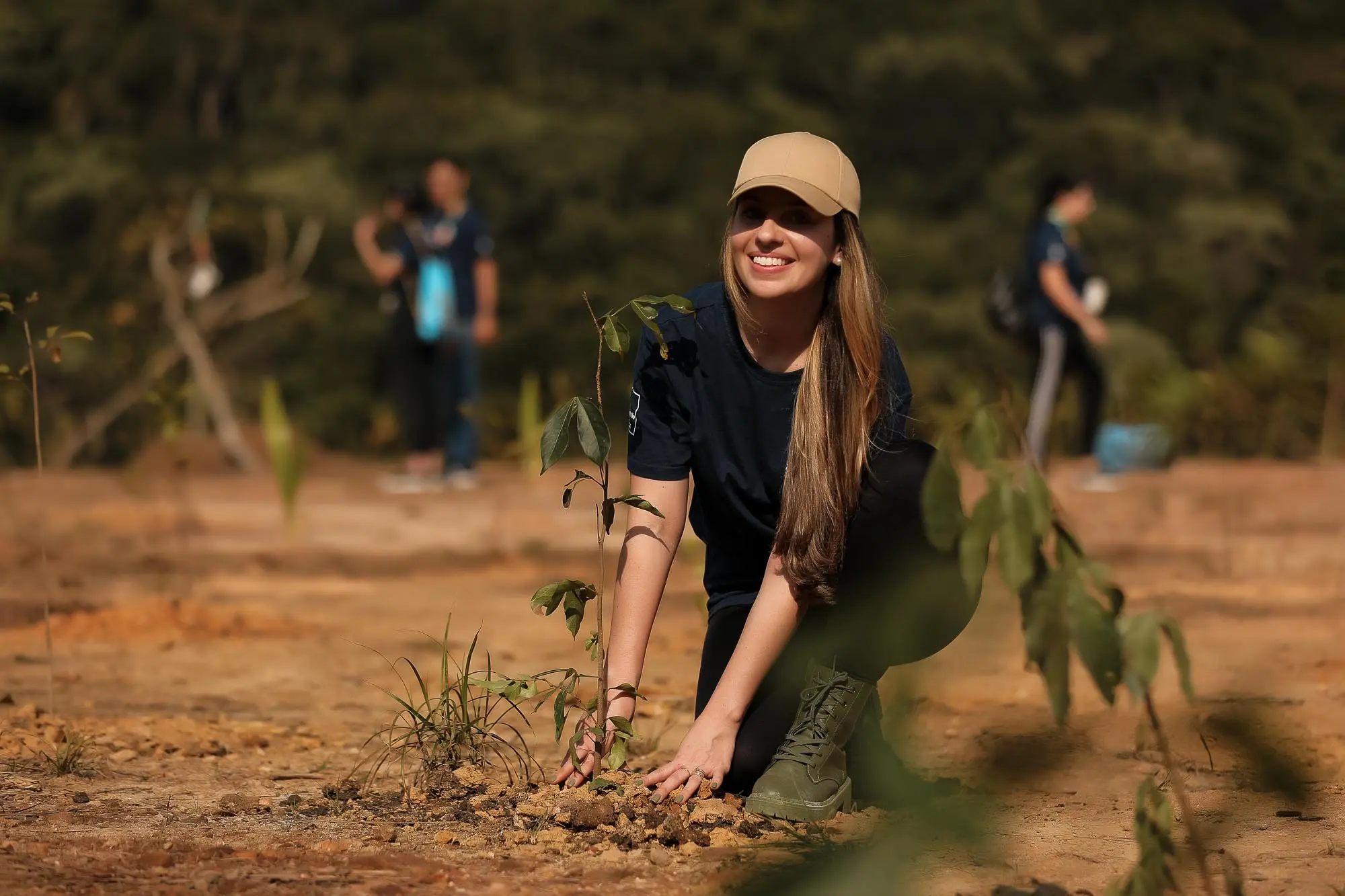
Methodological Note: Plantio DC is a socio-environmental initiative complementary to the operations of DC Logistics Brasil. The management of operational greenhouse gas (GHG) emissions is handled independently through the company’s carbon footprint report prepared in accordance with the GLEC Framework v3.2 and the GHG Protocol – Scope 3, and is reported separately with carrier documentation. The CO₂ capture data from Plantio DC is neither deducted from nor accounted for as an offset against the company’s operational emissions.
The Plantio DC project was created as an initiative that transforms the concept of responsible and sustainable logistics into together.
And this raises an important reflection: in a sector driven by cargo, operations, and deadlines, how can logistics movement be transformed into concrete socio-environmental contribution?
In a scenario where environmental preservation practices are becoming increasingly relevant, continuous actions with verifiable results are no longer merely institutional differentiators — they represent a genuine commitment to the future.
It is within this context that Plantio DC connects companies, people, and environmental responsibility.
More than a symbolic initiative, the project reinforces the concept of ESG in logistics and demonstrates that sustainability can — and should — be part of companies’ operational routines. It is integrated into DC Logistics Brasil’s broader ESG agenda, which includes emissions management (GLEC Framework v3.2), EcoVadis assessment, and alignment with the United Nations Sustainable Development Goals (SDGs), especially SDG 13 (Climate Action) and SDG 15 (Life on Land).
What is Plantio DC and how did it begin?
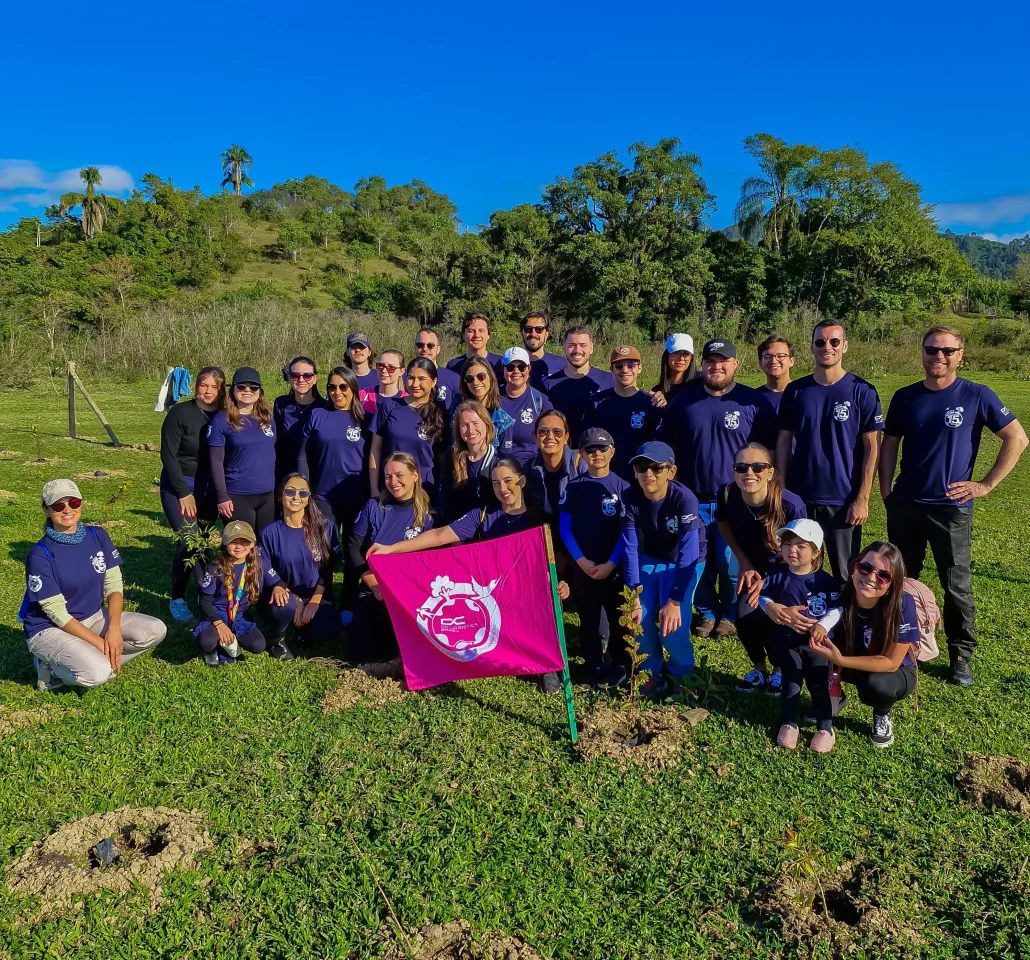
Plantio DC was born from the desire to contribute to a better world, demonstrating that responsible logistics can play a meaningful role in everyday operations.
Based on this purpose, environmental and social protection initiatives were structured, consolidating a consistent long-term project.
In practice, since 2010, DC Logistics Brasil has committed to planting one tree for every full-container shipment closed during the month of June.
At first glance, it may seem like a simple action, but when sustained over the years — and reaching its 16th anniversary in 2026 — the impacts become far greater.
And perhaps that is exactly what makes the project so meaningful.
Over time, employees, partners, and clients began supporting and participating in the initiative, strengthening a sustainable culture both inside and outside the company.
In other words, Plantio DC ceased to be merely an environmental campaign — it became part of DC Logistics Brasil’s identity.
What is the real socio-environmental impact of Plantio DC?
Sustainability in the logistics sector has been gaining global momentum, and Plantio DC follows this movement in a practical and continuous way.
Now in its 16th year, the project continues to expand its socio-environmental contribution through tree planting and awareness about the importance of responsible logistics.
But an interesting question arises here: is the impact limited only to the trees planted? In reality, no.
Beyond the environmental aspect, Plantio DC brings together people, companies, and partners around a shared purpose together.
The act of planting trees has become part of the company’s culture and also part of the experience of those involved in this journey.
We are talking about an initiative that connects logistics operations, socio-environmental responsibility, and legacy building — aligned with SDG 15 (Life on Land), which establishes global goals to protect, restore, and promote the sustainable use of terrestrial ecosystems.
This engagement becomes even more relevant at a time when consumers, companies, and markets increasingly value sustainable, verifiable, and long-term practices.
Why are sustainability and ESG important in logistics?
Sustainability and ESG in logistics are no longer trends. Today, they are strategic factors for the sector.
According to the Smart Freight Centre and the GLEC Framework (the global reference methodology for the freight and logistics sector), freight transportation accounts for approximately 8% of global GHG emissions (International Transport Forum, ITF Outlook 2021), measured under the GHG Protocol – Scope 3. Projections indicate that freight transport demand may double by 2050, making sector decarbonization an urgent priority within the context of the Paris Agreement.
In other words, logistics has direct responsibility for global environmental impacts, and reducing these impacts requires practical, continuous, and methodologically grounded actions.
It is no longer enough to simply communicate sustainability — companies must structure real, measurable initiatives aligned with internationally recognized frameworks.
This is precisely why projects like Plantio DC are increasingly relevant.
They demonstrate that responsible logistics can generate concrete socio-environmental contributions and help ensure a better quality of life for future generations, aligned with SDG 13 (Climate Action).
In addition, structured ESG practices strengthen:
- corporate reputation and credibility with clients and investors;
- relationships with customers and partners throughout the supply chain;
- strategic positioning and long-term competitiveness;
- an organizational culture focused on shared responsibility.
Ultimately, sustainability is also about building lasting value for the company, for people, and for the planet.
16 Years of Plantio DC: Contribution to Responsible Logistics
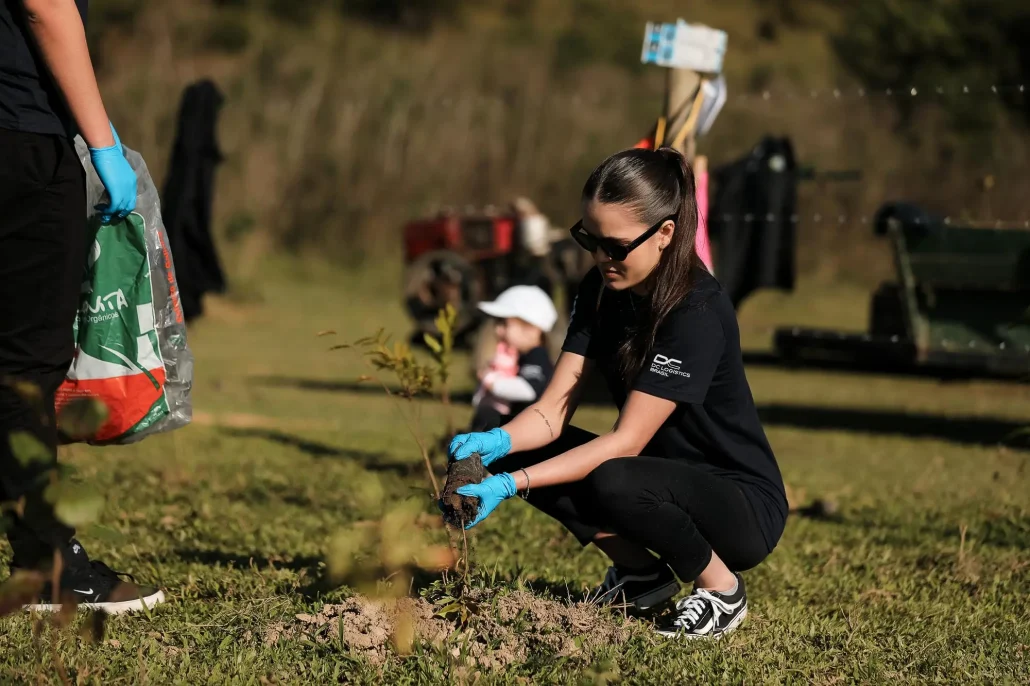
Over 16 years (2010–2026), Plantio DC has consolidated itself as an important initiative dedicated to building more sustainable and human-centered logistics.
During this period, the project achieved significant milestones:
- 67,658 trees planted;
- Estimated potential CO₂ capture calculated based on ESALQ/USP (Luiz de Queiroz College of Agriculture – University of São Paulo) standards, adapted to the GHG Protocol – Brazilian Program / IPCC methodology and the NBR ISO 14064:2018 standard.
Calculation Memory (Plantio DC 2025):
Average capture per tree: 140 kg of CO₂e over 20 years (equivalent to 1 tCO₂e for every 7 trees).
Applied survival rate: 50%.
Estimated cutting/loss rate over time: 45%.
Temporal growth factor considered (2025): 55%.
Period: 2010–2025 (15 planting cycles).
The values represent a preliminary estimate of potential carbon capture, subject to seedling development and the conditions of each planting area, without deduction from or offsetting against the company’s operational emissions.
These results demonstrate how continuous and methodologically grounded actions can generate significant long-term contributions.
Most importantly, Plantio DC has evolved from a one-time initiative into a permanent institutional commitment by DC Logistics Brasil, integrated into its ESG agenda and Socio-Environmental Responsibility Program.
Expectations for 2026 are also positive, reinforcing the continuity of the project and the strengthening of a culture focused on environmental responsibility.
If you also believe that logistics and sustainability can — and should — move forward together, learn more about DC Logistics Brasil’s Socio-Environmental Responsibility Program.
Because moving cargo is essential. But driving transformation is what defines a company’s legacy.
FAQ – ESG, Sustainability, and Responsible Logistics
Responsible logistics refers to the adoption of operational practices aimed at reducing environmental impacts, strengthening sustainable relationships throughout the supply chain, and generating long-term social and economic value.
ESG in logistics involves actions related to environmental responsibility (E), social impact (S), and corporate governance (G) within logistics operations and supply chains. At DC Logistics Brasil, the ESG agenda includes emissions management, EcoVadis assessment, ISO 45001 compliance, and initiatives such as Plantio DC.
Because logistics activities significantly contribute to global GHG emissions. According to the Smart Freight Centre and the GLEC Framework, freight transportation accounts for approximately 8% of global emissions (GHG Protocol, Scope 3). With global freight demand projected to double by 2050, sector decarbonization is both urgent and strategic.
Plantio DC is a socio-environmental initiative by DC Logistics Brasil that, since 2010, has promoted the planting of native trees to contribute to biodiversity, employee and partner engagement, and the strengthening of a responsible logistics culture. The project is complementary to the company’s operational emissions management.
The project began in 2010 with the commitment to plant one tree for every full-container shipment closed during the month of June. In 2026, Plantio DC celebrates 16 years of continuous activity connecting logistics, sustainability, and socio-environmental responsibility.
Over 16 years (2010–2026), the project achieved 67,658 planted trees. The estimated potential CO₂ capture is calculated based on the ESALQ/USP methodology, adapted to the GHG Protocol – Brazilian Program and NBR ISO 14064:2018, considering a 50% survival rate and an average capture of 140 kg of CO₂e per tree over 20 years. These values are preliminary estimates of potential capture and are not accounted for as offsets against the company’s operational emissions.
Yes. Structured and methodologically grounded ESG initiatives help strengthen corporate reputation, relationships with clients and partners, strategic positioning, and organizational culture. Assessments such as EcoVadis and alignment with the UN SDGs are recognized references in this context.
No. ESG and sustainability are now strategic factors for competitiveness, regulatory compliance, and sustainable corporate growth. In the logistics sector, frameworks such as the GLEC Framework, the GHG Protocol, and regulations such as the European Union’s CSRD establish sustainability as a market requirement rather than an option.
DC Logistics Brasil prepares its emissions inventory based on the GLEC Framework v3.2 and the GHG Protocol – Scope 3, reporting emissions in tCO₂e by transport mode. Operational emissions management is handled independently and separately from planting initiatives, in accordance with international sustainability reporting best practices.
Content developed based on the DC Logistics Brasil Socio-Environmental Responsibility Program, GLEC Framework v3.2 (Smart Freight Centre), GHG Protocol, NBR ISO 14064:2018, ESALQ/USP, and aligned with SDG 13 and SDG 15 of the United Nations 2030 Agenda.


